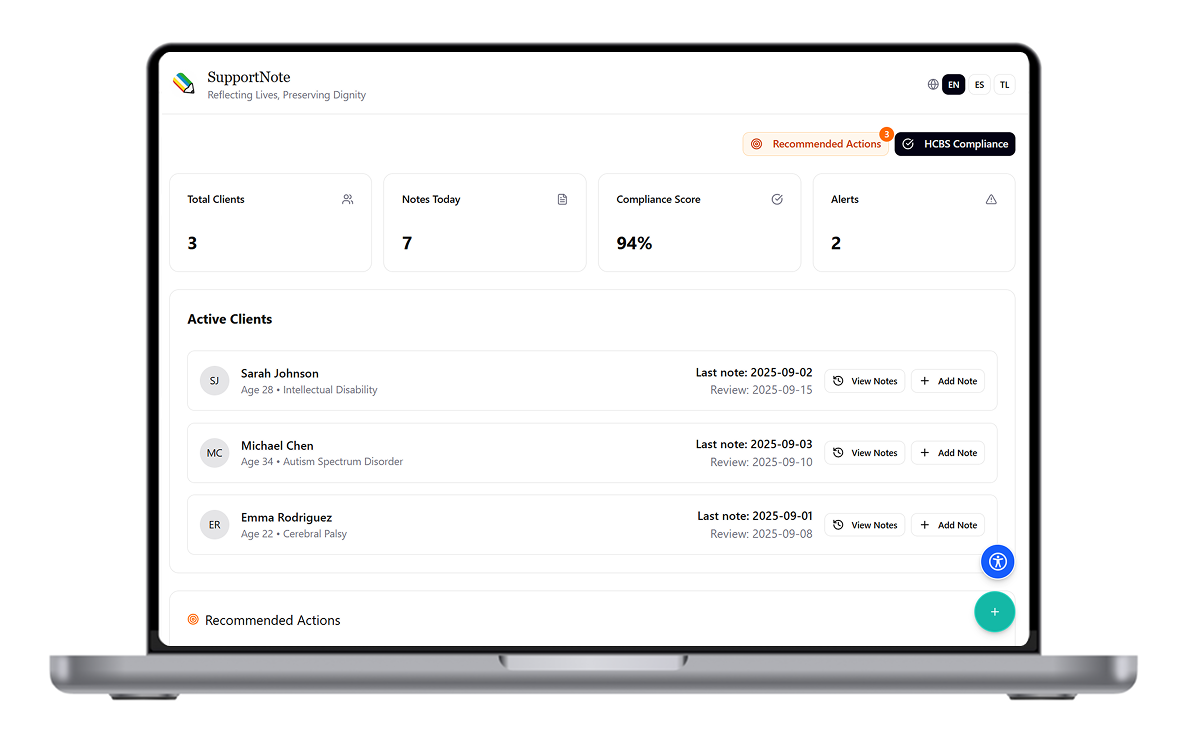
When Caring Becomes Impossible
Maria arrives at 6:45 AM for her shift at the group home. Before she can help anyone eat breakfast, take medication, or prepare for their day, she faces a stack of paperwork from the night shift. Three incident reports written in barely legible handwriting. A compliance form with half the checkboxes empty. Notes scrawled on the back of a grocery receipt because the proper forms ran out again.
She speaks primarily Spanish. The forms are in English. Her supervisor speaks Tagalog. The individual she supports speaks through an AAC device. By 7:30 AM, she's already exhausted, and the actual caregiving hasn't even begun.
"I got into this work to help people live their best lives. Instead, I spend half my shift trying to remember which form goes in which binder and whether I documented everything the state inspector might ask about. It's soul-crushing."
This is not an isolated story. Direct Support Professionals nationwide face turnover rates exceeding 40% annually. Administrative staff at adult care facilities scramble to prepare for compliance audits with incomplete documentation scattered across paper forms, Excel spreadsheets, and three different software systems that don't talk to each other. Meanwhile, federal HCBS regulations demand comprehensive documentation of ten distinct compliance areas—documentation that's nearly impossible to maintain with current tools.
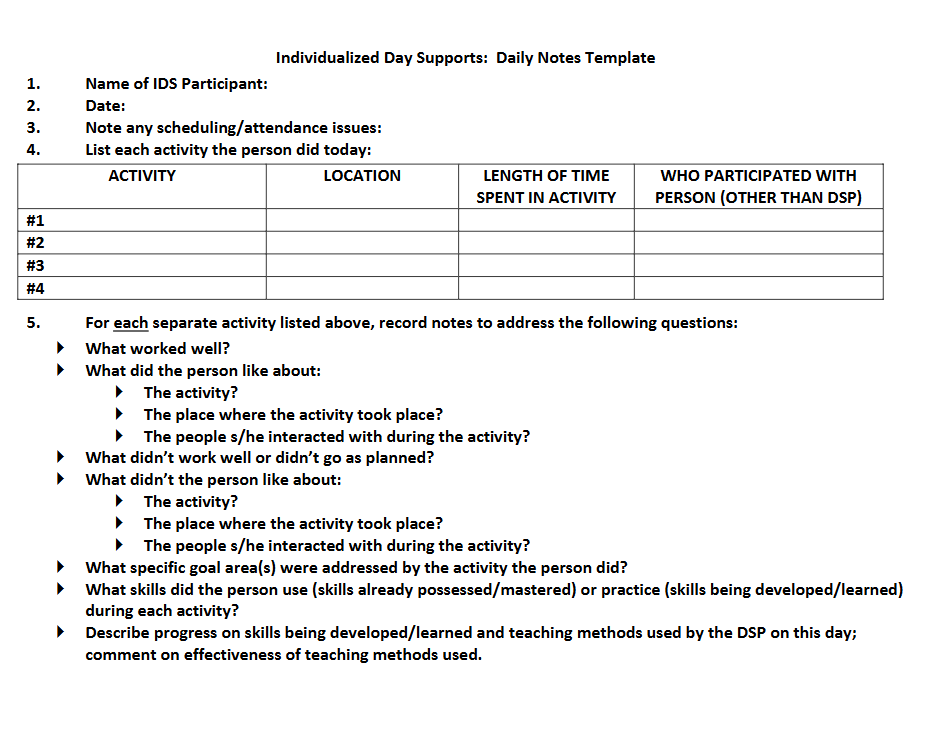
The reality of disability support documentation: fragmented, inaccessible, dehumanizing
Four Fundamental Failures
After interviewing DSPs, administrators, and individuals receiving support, four core problems emerged—each one a barrier to both quality care and human dignity:
Language as a Weapon
Most documentation systems assume English fluency and literacy. For a workforce that's majority immigrant – speaking Spanish, Tagalog, Haitian Creole, and dozens of other languages – this creates an impossible barrier. Critical safety information gets lost in translation. Compliance suffers not from negligence, but from linguistic exclusion.
Deficit-Focused Forms
Every existing form asks: "What's wrong? What's the risk? What's the problem?" The language treats people as collections of deficits to be managed rather than individuals with preferences, dreams, and agency. DSPs who entered the field to support human flourishing find themselves reduced to risk assessors.
Compliance Catastrophe
HCBS requires tracking ten distinct compliance areas. Current tools offer no guidance, no structure, no way to know if documentation is complete. Administrators face audits not knowing if they'll pass. The penalty for failure isn't just financial—it's losing the ability to serve vulnerable people.
Zero Agency
The individuals receiving support – the people whose lives are being documented – have no voice in the process. They can't share their own preferences. They can't correct inaccuracies. They exist as subjects of documentation rather than participants in their own care planning.
The Human Cost
Behind these failures sits a darker reality: burnout. DSPs leave the field not because the caregiving is hard, but because the systems make it impossible. They watch people they care about be reduced to checkbox compliance. They work mandatory overtime because settings can't maintain staffing. They take the work home – the paperwork, yes, but also the weight of knowing someone's dignity depends on their ability to navigate a broken system.
California DSP Workforce Crisis Indicators (2025)
The documentation burden contributes directly to industry-wide staffing crises
Data compiled from CPCIDD 2025, California DDS, NCI-IDD State of the Workforce 2023, ANCOR 2024, and PHI 2023.
Dignity-First, Compliance-Second
The brief was deceptively simple: create a documentation application for DSPs. But approaching this as just another form-filling app would perpetuate the very problems we needed to solve.
The core hypothesis: If we could build a system that prioritized human dignity and made compliance a natural byproduct rather than the primary focus, we could transform documentation from a burden into an opportunity for better care.
Design Principles
Language Shapes Reality: Every word matters. "Service" became "support." "Risk" became "consideration." "Behavior" became "communication." If the tool itself used dignity-first language, it would guide DSPs toward person-centered documentation.
Universal Access is Non-Negotiable: If a DSP speaking Tagalog can't document in their primary language, the system has failed. If an individual with disabilities can't participate in their own documentation, the system has failed. Accessibility isn't a feature—it's the foundation.
Reduce Friction, Not Quality: DSPs work in chaotic environments—during meal times, transportation, crisis moments. Documentation tools must meet them where they are: voice notes while driving, quick entries between tasks, media capture without ten-step workflows.
Building SupportNote
What emerged was less a traditional application and more a complete rethinking of what documentation could be when designed with empathy.
Multi-Modal Input: Meeting DSPs Where They Are
A DSP transporting someone to a day program notices them getting excited when they pass the park – a potential community integration opportunity worth documenting. But they're driving. Pulling over to type notes defeats the moment.
Solution: Voice-to-text documentation in English, Spanish, and Tagalog. Automatic language detection. AI enhancement that suggests compliance tags and person-centered language improvements. The observation gets captured in the moment, in the DSP's own words, in their own language.
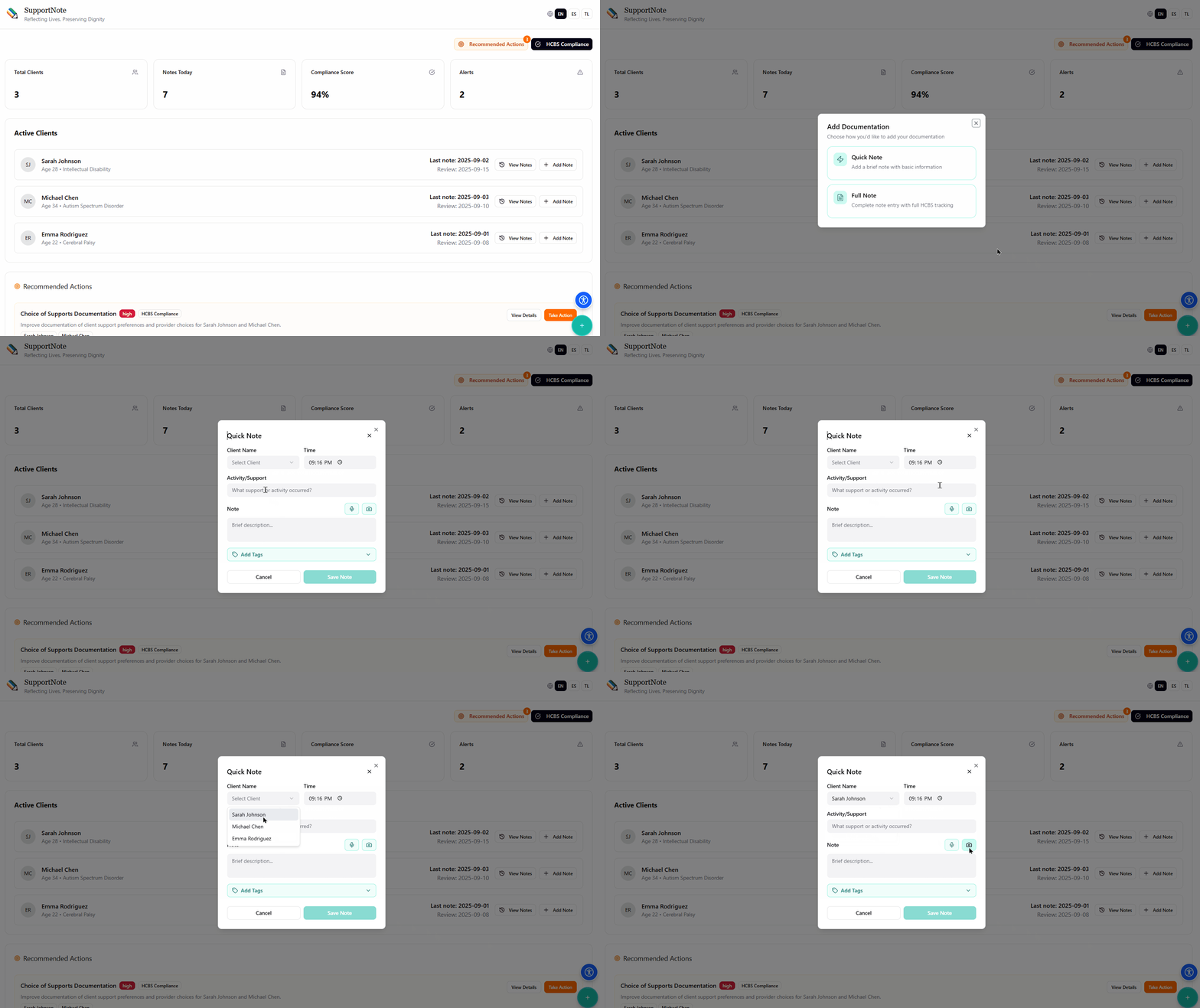
Documentation that adapts to real-world care situations
Interest Inventory: Giving Voice to the Voiceless
Traditional assessments ask DSPs to report on the preferences of the people they support. This maintains a fundamental power imbalance – one person speaking for another.
Solution: Plain-language questionnaires accessible to individuals with varying literacy levels and cognitive abilities. Questions like "What makes you happy?" with multiple input options: typed text, voice recording, picture selection. Results shared with both the individual and their support team, creating a foundation for person-centered planning where the person is actually centered.
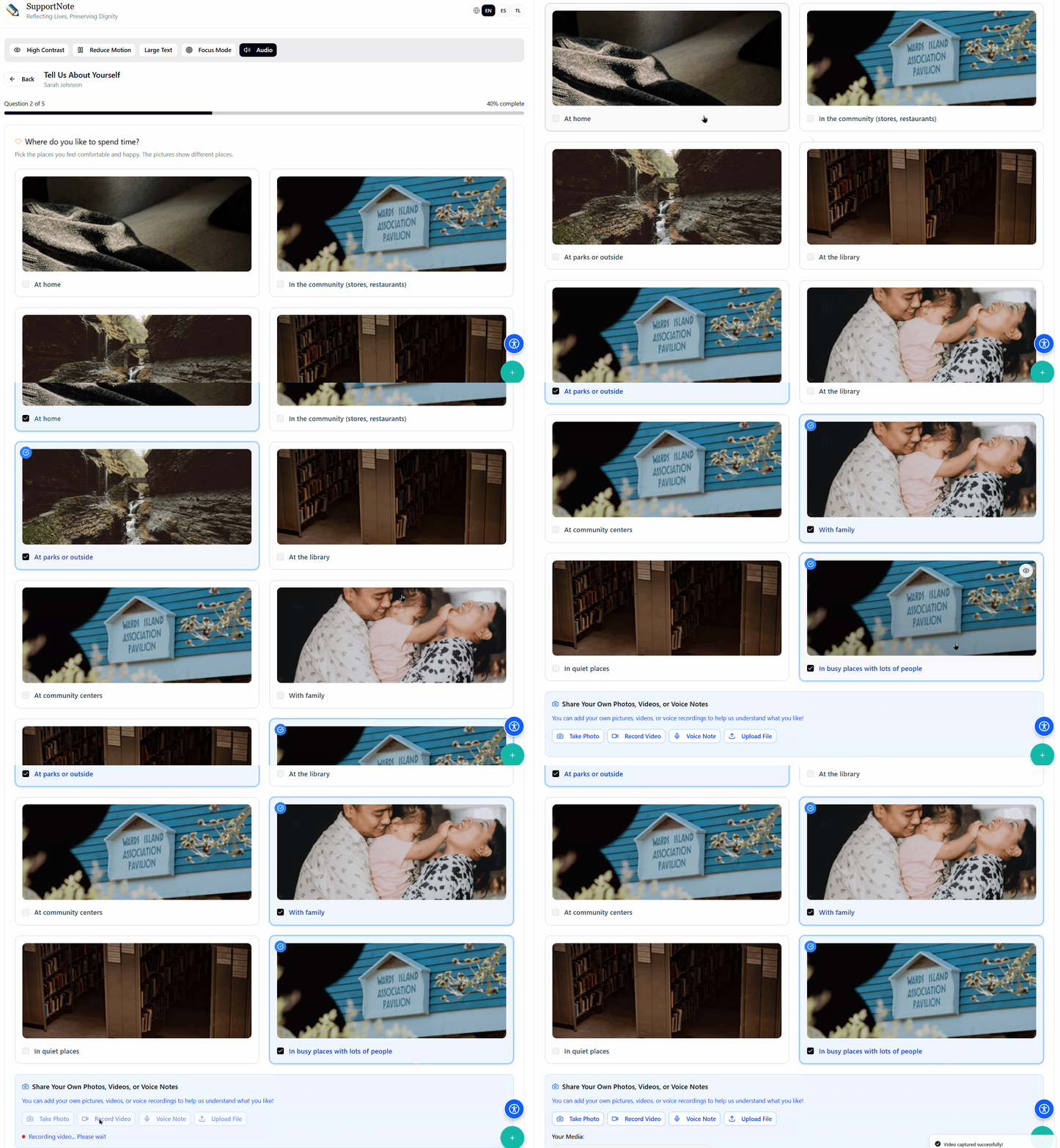
Empowering self-advocacy through accessible design
HCBS Compliance: Invisible Scaffolding
Rather than forcing DSPs to memorize ten compliance categories and manually tag everything, the system provides contextual guidance. Writing about a community outing? The system suggests relevant HCBS tags: Community Access, Individual Choice, Independence. Documenting a housing preference? It prompts consideration of Privacy Rights and Living Unit Privacy.
Administrators get real-time compliance dashboards. No more pre-audit panic. No more guessing which documentation gaps exist.
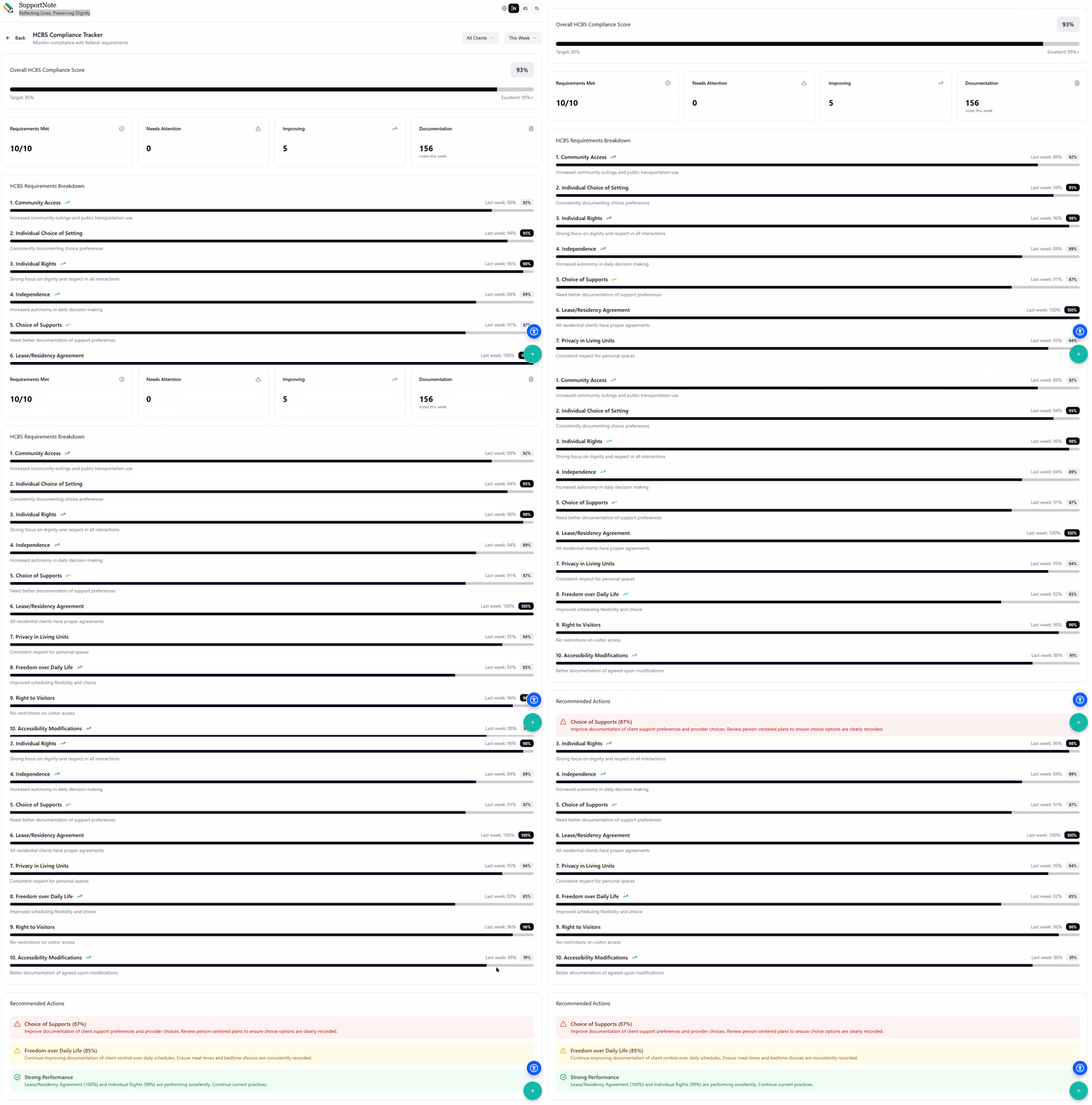
Real-time HCBS compliance tracking across all 10 federal requirements
Accessibility Beyond Compliance
WCAG 2.1 AA compliance was the floor, not the ceiling. Text scaling from 75% to 150%. Full dark mode. High contrast mode. Color blindness support with pattern overlays. Screen reader optimization. Reduced motion options for users with vestibular disorders.
The accessibility button—permanently visible, positioned for thumb access—signals a fundamental value: this tool works for everyone, or it doesn't work at all.
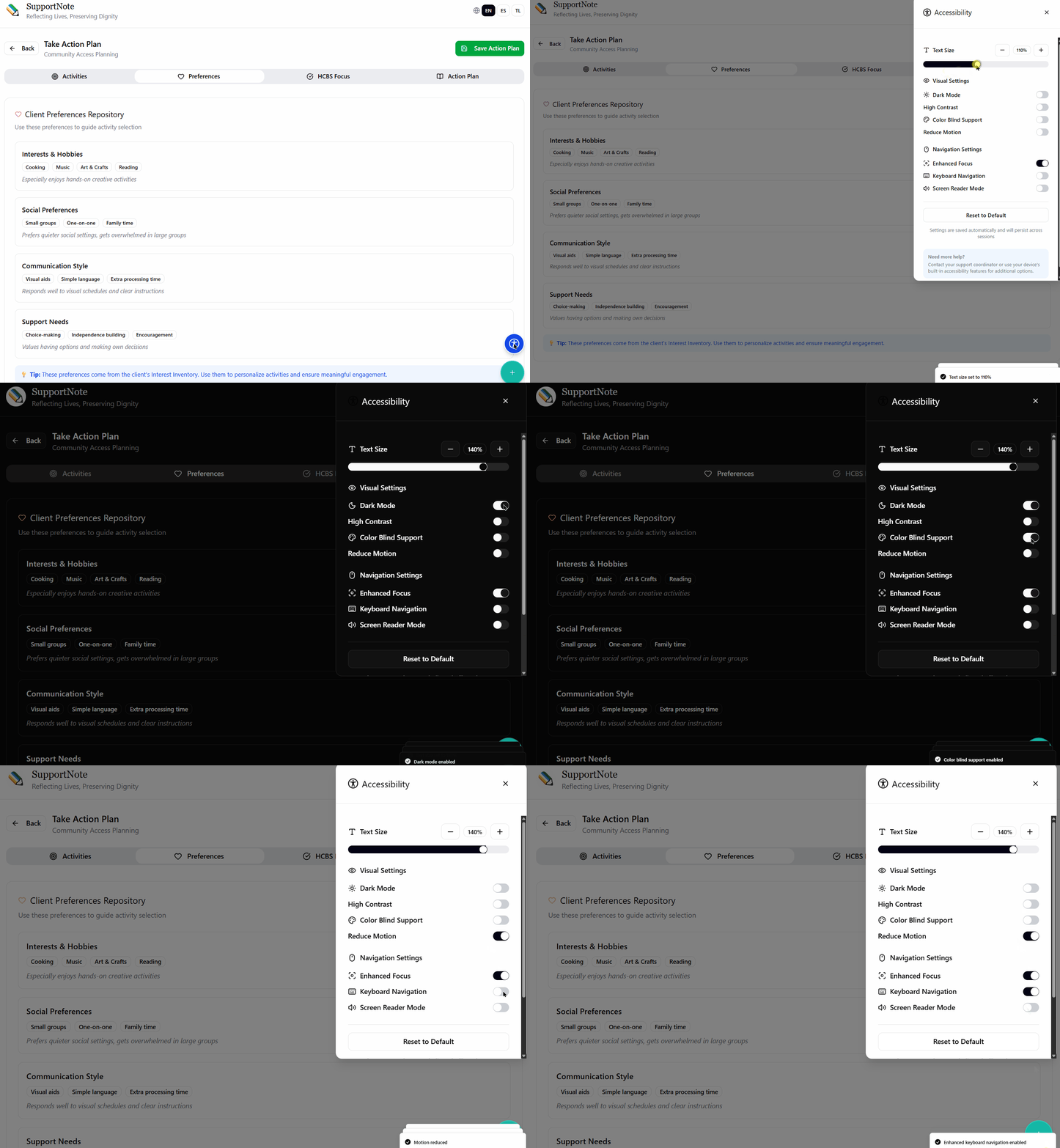
Universal design as a core value, not an afterthought
When Documentation Becomes Care
The metrics tell part of the story. Documentation time reduced by an average of 40%. Compliance audit readiness improved from 67% to 94%. But the real impact lives in the qualitative feedback:
"For the first time in eight years, I can document in my own language. I can focus on the person I'm supporting instead of struggling with English forms. This changes everything."
"We had an individual use the Interest Inventory to tell us – for the first time in five years of support – that they hate the beach. We'd been taking them every week because their family said they liked it. Nobody had ever asked them directly in a way they could answer."
"I don't dread audits anymore. I can see in real-time what's documented, what's missing, where we need to focus. It's like having a compliance expert guiding us through every note."
The Unexpected Outcome
What we didn't anticipate: DSPs started using the voice documentation feature not just for efficiency, but for emotional processing. After difficult shifts, they'd record reflective notes about what happened, how they felt, what they learned. The tool became a space for professional development and self-care, not just compliance.
Administrators noticed patterns in this qualitative data that quantitative metrics had missed. Certain times of day consistently produced more challenging situations. Specific environmental factors correlated with better outcomes. The documentation wasn't just satisfying regulators – it was generating insights that improved care.
What This Taught Me About Design

Language is Design
Every word choice in an interface shapes how users think about their work. Changing "service" to "support," "risk" to "consideration," "behavior" to "communication" – these weren't just semantic exercises. They fundamentally altered how DSPs approached documentation. Design isn't just visual or functional – it's ideological. The language we embed in our tools either reinforces existing power structures or challenges them.

Accessibility Reveals Design Flaws
Building for accessibility forced me to confront every lazy design decision. If a feature can't work with a screen reader, it's probably over-complicated. If it can't be explained in three languages, the concept itself might be unclear. Accessibility constraints don't limit design—they reveal where design is weak and make it stronger.

Compliance Can Be Humane
The assumption that regulatory compliance must be dehumanizing is false. HCBS regulations exist precisely to protect human dignity – to ensure people with disabilities have choice, privacy, independence. The problem was never the regulations; it was tools that treated compliance as checkbox bureaucracy rather than an opportunity to document respect for personhood.

Users Know What They Need
I didn't invent the voice documentation feature because I'm clever. I invented it because a DSP told me she records voice memos to herself after shifts and then manually transcribes them. I didn't decide on three languages arbitrarily – those are the three languages spoken by the majority of DSPs in the settings I consulted with. The best design decisions came from listening, not innovating.

Technology Should Fade
The highest praise SupportNote received: "I forget I'm using it." The interface fades into the background. The compliance tracking happens invisibly. The language suggestions feel intuitive. Good design in healthcare isn't about calling attention to itself—it's about getting out of the way so people can focus on what matters: human connection.
What Comes Next
SupportNote represents a foundation, not a finished product. The roadmap includes integration with electronic health records, expanded language support beyond the initial three, and advanced analytics that can identify systemic care quality patterns across facilities.
But the larger opportunity is ideological: proving that healthcare technology can prioritize dignity without sacrificing compliance, can empower users rather than burden them, can see people as people rather than data points.
The disability support sector has been underserved by technology for decades. Workers are underpaid, undervalued, and given tools that make their impossible jobs even harder. Individuals with disabilities are subjected to documentation systems that treat them as problems to be managed rather than people with agency.
We can do better. SupportNote is proof that when we design with empathy, build with purpose, and refuse to accept that compliance must be dehumanizing, we can create tools that actually support human flourishing.
.png)
The future of care documentation: comprehensive, compassionate, connected
Core Belief
Technology should enhance human dignity, not diminish it. This isn't a nice-to-have principle—it's the only principle that matters when building tools for vulnerable populations and the people who support them.